Vanguard Lift
When asking “What Are China Top Emergency Brake Systems for Lifts?”, safety must come before brand names or marketing claims. The practical question is more specific: what are the emergency brake systems in modern lifts, and how do they respond when speed, direction, or control functions become abnormal?
Modern Chinese lifts commonly use traction machine brakes, overspeed governors, safety gears, and emergency electrical circuits. The governor monitors car speed through a rotating pulley and activates the safety gear when overspeed develops. Wedge-shaped safety components then grip the guide rails. In the machine room, a spring-applied, electrically released brake can hold the traction sheave during power loss. Some newer designs add monitoring sensors, brake-force verification, and controlled stopping functions. These layers work together. No single device should carry the entire risk.
Dr. Albert So, a recognized lift safety researcher, has stated, “Lift safety depends on reliable protection layers, not one isolated component.” This principle helps explain why leading Chinese manufacturers focus on certified parts, repeated testing, and documented maintenance. Standards such as GB/T 7588 and EN 81-20 also influence equipment design and verification, although local project requirements still matter.
The details are tangible. A worn brake lining can increase stopping distance. A poorly adjusted governor may delay activation. A clean guide rail can help safety gear engage correctly. Yet specifications alone cannot guarantee safe performance. Installation quality, inspection records, technician training, and replacement intervals remain decisive. This article examines China’s leading emergency brake solutions, their operating principles, and the practical limitations buyers should consider. Safety is engineered, tested, and maintained.
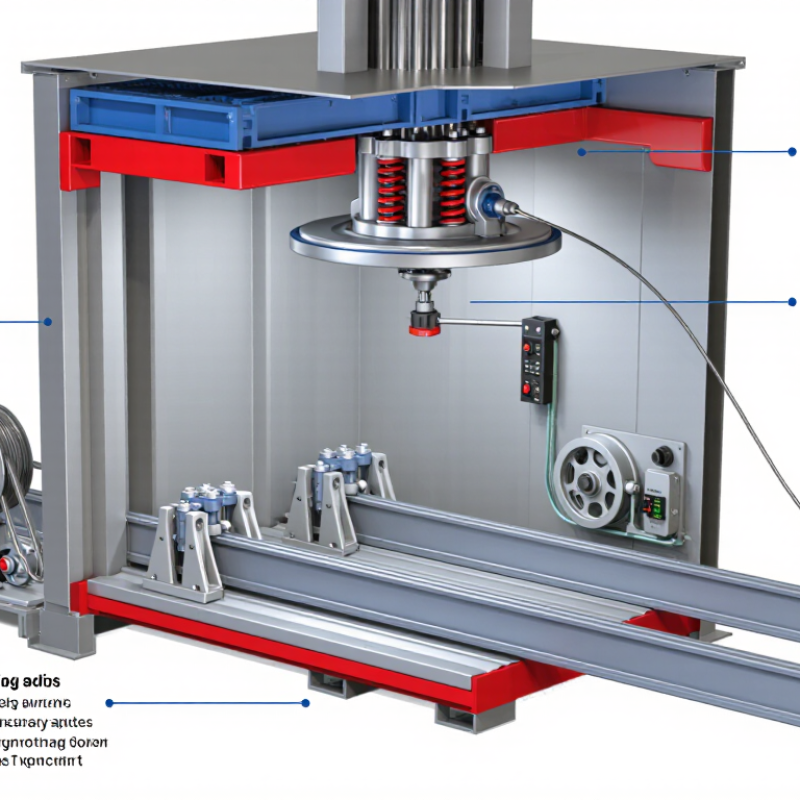
An emergency brake system for a lift is a layered safety arrangement that limits dangerous car movement. It is not simply the brake inside the traction machine. Think of it as a final protective barrier. During serious overspeed, a governor detects abnormal movement and activates safety gear. The gear grips the guide rails and helps stop the lift car in a controlled way. Buffers at the shaft bottom provide additional protection, but they are not a replacement for the safety gear.
In practical lift inspections, technicians examine the governor, linkage, safety gear, guide rails, and machine brake together. They check clearances, fastening points, corrosion, and signs of uneven contact. A brake may hold the car correctly during normal stops yet fail under poor adjustment. Small details matter. Testing should follow the equipment’s approved procedures and local safety requirements, with results recorded clearly. Maintenance teams also verify that electrical safety circuits can interrupt operation before a mechanical emergency occurs.
For lift projects in China, designers usually match the emergency system to the car’s rated load, speed, travel height, and operating environment. Reliable installation depends on accurate alignment and compatible components, not only impressive specifications. One weakness is often overlooked: neglected cleaning around guide rails can affect braking performance. A technically strong system can still become unreliable without disciplined inspections, trained personnel, and timely replacement of worn parts. Clearance readings should be measured, not estimated.
In modern lifts, an emergency brake system is a coordinated safety chain, not one single device. In many traction lifts, an overspeed governor monitors the car’s movement through a steel rope. If the car travels too quickly downward, the governor locks and activates the safety gear beneath the car frame.
The safety gear then grips the guide rails with hardened wedges or rollers. Friction increases gradually, reducing the car’s speed instead of stopping it like a sudden door slam. A separate electrical circuit usually cuts power to the motor and applies the machine brake. This layered response matters because one component may not perform perfectly under dust, corrosion, or poor adjustment.
Maintenance technicians inspect governor ropes, rail clearances, brake linings, and release mechanisms during scheduled service. They also perform controlled tests, recording stopping distance and unusual vibration. Small details matter. A loose connection can delay activation. Excessive rail oil can reduce gripping force. No mechanism is flawless. Some inspections focus heavily on visible wear and miss gradual changes in response time. Better practice combines measurements, operating history, and careful listening during testing. The strongest systems are designed with redundancy, but their reliability still depends on accurate installation, regular inspection, and technicians who question unexpected results.
A lift emergency braking system commonly combines an overspeed governor with safety gear that grips the guide rails. When downward speed exceeds the governor setting, the governor initiates the safety gear, which decelerates and holds the car. The chart shows calculated maximum governor trip speeds for selected rated speeds under EN 81-20 reference limits: 140% of rated speed up to 1 m/s, 1.25v + 0.25 m/s above 1 m/s up to 1.5 m/s, and 1.20v + 0.30 m/s above 1.5 m/s. Actual designs must be verified against the applicable local code and certified equipment requirements.
China manufactures several types of emergency brakes for lifts, each designed for a different failure condition. The most common is the safety gear, which grips the guide rails when excessive downward speed occurs. Instantaneous safety gear stops the car quickly. Progressive safety gear uses controlled friction and reduces impact forces.
Overspeed governor systems are another important type. A governor detects abnormal speed and activates the safety gear through a mechanical linkage. Some Chinese-made systems provide protection in both upward and downward directions. This feature can help manage traction problems, broken suspension components, or uncontrolled car movement. Counterweight safety devices are also available for selected lift designs.
Rope brakes provide another layer of protection. They clamp the hoisting rope or traction-related components when the control system detects dangerous movement. Their design requires careful adjustment, because excessive clamping may increase wear or create difficult maintenance conditions. In real installations, technicians should check stopping distance, trigger speed, rail condition, and reset performance. Testing matters more than appearance. A polished housing proves little.
Chinese suppliers often produce standard and customized configurations for passenger lifts, freight lifts, and modernization projects. However, specifications can vary considerably between factories. Buyers should review test reports, material details, rated loads, installation instructions, and traceability records. A common weakness is assuming that one emergency brake fits every shaft layout. It does not. Field measurements and independent inspection remain necessary before acceptance.
Evaluating China’s top lift brake manufacturers starts with evidence, not catalog language. Ask for traceable test reports, material certificates, and production records for each emergency brake model. A serious supplier explains rated load, overspeed response, stopping distance, reset method, and temperature limits in plain technical terms. Request samples from regular production, not specially polished units. Evidence matters. Missing serial records should trigger questions.
Visit the factory when possible. Check machining accuracy, heat-treatment controls, spring inspection, and final assembly procedures. Review calibration logs for load benches and overspeed testing equipment. Confirm compliance with applicable lift safety standards and local installation requirements. The quality team should show corrective-action records, including failures and repeat testing. Transparent factories do not hide weak data. Yet a clean audit can still miss field problems. Certificates are not enough. Ask for installation feedback from comparable lift projects, maintenance intervals, and replacement rates.
A capable manufacturer supports engineers after delivery. Evaluate drawing revision control, response time, spare-part availability, and training for local technicians. Confirm that the brake integrates with the governor and safety circuit without creating nuisance trips. Independent verification is valuable, especially for new designs or unusual shaft conditions. Compare five-year operating costs, not only purchase prices. One concern deserves reflection: the cheapest brake may become expensive after repeated adjustments. Require clear acceptance criteria before signing, and record every deviation during pilot installation.
China’s lift emergency brake systems are governed by technical standards, not by appearance or stopping speed alone. In practice, engineers examine the overspeed governor, safety gear, guide rails, and rope connection as one protective chain. The system must detect abnormal descent and stop the car within defined conditions. Small details matter. A worn governor rope can change the response time.
In China, the GB/T 7588 series provides key safety requirements for lift design, installation, and protective devices. Inspection procedures also follow applicable regulatory rules and current local requirements. International projects may reference EN 81-20 and EN 81-50, or ASME A17.1/CSA B44. ISO 8100 standards are also increasingly relevant. These documents address safety gear performance, overspeed detection, testing methods, clearances, and component verification. The exact edition matters.
A qualified assessment should compare the lift’s design documents with its installed equipment. Technicians should record governor trip speed, brake response, guide-rail condition, and test results. Visual checks alone are weak evidence. In older buildings, maintenance records may be incomplete. That is an uncomfortable but common limitation. Standards cannot correct poor adjustment or neglected testing. Periodic examinations, controlled load tests, and traceable records provide stronger evidence. Requirements can differ by province, building type, and approval date, so the latest locally adopted edition should be confirmed before replacement or commissioning.
| Priority | Emergency Protection System | Primary Safety Function | Activation and Braking Method | Typical Application in China | Main Governing Standards | Inspection Focus |
|---|---|---|---|---|---|---|
| Common Emergency Braking and Overspeed Protection Systems | ||||||
| 1 | Progressive car safety gear with an overspeed governor | Stops or decelerates an overspeeding car moving downward and holds the car on its guide rails. | The overspeed governor detects excessive car speed and trips the governor rope. The safety gear then clamps progressively onto the guide rails, limiting stopping force and deceleration. | The standard choice for many passenger and freight lifts, especially where controlled stopping performance and passenger comfort are important. | GB/T 7588.1-2020 GB/T 7588.2-2020 ISO 8100-1:2019 EN 81-20 | Governor tripping, rope tension, safety-gear engagement, guide-rail condition, stopping distance, and reset procedure. |
| 2 | Instantaneous car safety gear with an overspeed governor | Provides rapid mechanical stopping when the car exceeds the permitted downward speed. | Governor activation causes wedges or clamping elements to grip the guide rails with little sliding distance. | More suitable for certain low-speed lifts and applications where the permitted speed, guide-rail design, and stopping characteristics satisfy the applicable safety requirements. | GB/T 7588.1-2020 GB/T 7588.2-2020 ISO 8100-1:2019 EN 81-20 | Compatibility with rated speed, guide-rail type, mechanical release, governor operation, and evidence that impact forces remain within permitted limits. |
| 3 | Ascending car overspeed protection system | Protects against excessive upward car speed, which may occur because of traction, drive, brake, or control-system faults. | A monitoring device detects ascending overspeed and initiates a certified stopping action, such as machine braking, rope braking, car safety gear, or another compliant mechanical arrangement. | Used on traction lifts where protection against uncontrolled upward movement is required by the lift safety design. | GB/T 7588.1-2020 GB/T 7588.2-2020 ISO 8100-1:2019 EN 81-20 | Overspeed detection, independent initiating circuit, stopping elements, brake redundancy, stopping performance, and protection against unintended bypass. |
| 4 | Unintended car movement protection system | Prevents unintended movement away from a landing when the doors are not fully closed and locked. | A monitoring circuit detects unintended movement and activates a certified stopping device within the defined protection zone. | Important for passenger lifts with frequent boarding and unloading, particularly where level accuracy and door-zone safety are critical. | GB/T 7588.1-2020 GB/T 7588.2-2020 ISO 8100-1:2019 EN 81-20 | Door-zone detection, landing-door locking, activation speed, stopping distance, protection-zone coverage, and periodic functional testing. |
| 5 | Machine brake and redundant holding-brake arrangement | Stops and holds the traction machine, preventing car movement during normal stopping and selected emergency conditions. | Spring-applied, electrically released brake equipment applies when power is removed or when a monitored fault occurs. Multiple independent braking elements may be required by the design. | Widely used on traction lifts as the normal stopping and holding device and as part of overspeed or unintended-movement protection. | GB/T 7588.1-2020 GB/T 7588.2-2020 ISO 8100-1:2019 EN 81-20 | Brake lining or disc condition, spring force, air gap, release monitoring, independent braking circuits, stopping torque, and emergency manual release provisions. |
| 6 | Counterweight safety gear, where provided | Stops an uncontrolled or overspeeding counterweight when the lift design includes counterweight safety protection. | A governor or equivalent approved triggering arrangement activates the counterweight safety gear on the counterweight guide rails. | Applied only where required or selected by the lift design, risk assessment, rated parameters, and applicable approval requirements. | GB/T 7588.1-2020 GB/T 7588.2-2020 ISO 8100-1:2019 | Correct installation, guide-rail compatibility, governor operation, clearances, mechanical release, and post-test resetting. |
| 7 | Buffers as supplementary terminal protection | Absorb energy if the car or counterweight travels beyond the normal terminal zone. Buffers are not a substitute for an overspeed governor and safety gear. | The car or counterweight contacts an energy-absorbing or energy-storing buffer at the end of travel. | Installed at the bottom of the car and counterweight travel areas in accordance with the lift layout and rated parameters. | GB/T 7588.1-2020 GB/T 7588.2-2020 ISO 8100-1:2019 EN 81-20 | Buffer type, stroke or energy rating, vertical alignment, corrosion, anchorage, switch operation where fitted, and clearance in the pit. |
| Standards and Regulatory Framework | ||||||
| — | Chinese elevator safety standard | Specifies essential safety requirements for the construction and installation of electric lifts, including overspeed protection, safety gear, machine brakes, unintended movement protection, buffers, and related safety circuits. | Primary technical reference for new electric lifts designed and installed in China. |
GB/T 7588.1-2020 Safety rules for the construction and installation of electric lifts — Part 1: Passenger and goods passenger lifts. |
Design documentation, conformity evidence, type-test information, installation quality, and commissioning tests. | |
| — | Chinese technical calculation and verification standard | Provides calculation and examination principles supporting the safety requirements for lift components and systems. | Used together with the corresponding safety-requirement standard during design review, component verification, and conformity assessment. |
GB/T 7588.2-2020 Safety rules for the construction and installation of electric lifts — Part 2: Design rules, calculations, examinations, and tests. |
Calculations for safety components, braking performance, stopping conditions, traction, guide rails, and verification tests. | |
| — | International reference standard | Establishes globally recognized safety principles for passenger and goods passenger lifts, including protective devices against overspeed and unintended movement. | Used as an international reference and may support projects involving cross-border design, procurement, or certification. |
ISO 8100-1:2019 Safety rules for the construction and installation of lifts — Part 1: Passenger and goods passenger lifts. |
Comparison of safety functions, component design, verification methods, and risk-control measures. | |
| — | European design and testing references | EN 81-20 covers safety rules for lift construction and installation, while EN 81-50 covers design rules, calculations, examinations, and tests of lift components. | Commonly referenced for international projects, imported components, and technical comparisons, subject to the applicable Chinese approval requirements. |
EN 81-20 EN 81-50 |
Assessment of safety-gear, governor, brake, buffer, locking-device, and overspeed-protection documentation. | |
| — | Chinese inspection and test rules | Provide procedures for supervision inspection and periodic inspection of lifts, including functional checks of safety devices and emergency protection systems. | Applied by qualified inspection organizations and responsible parties during commissioning, supervision inspection, and periodic inspection. |
TSG T7001-2023 Elevator Supervision Inspection and Periodic Inspection Rules. |
Safety-circuit tests, governor and safety-gear tests, brake tests, unintended-movement protection, emergency operation, records, and rectification of defects. | |
It is a layered safety arrangement that limits dangerous car movement. A governor detects overspeed and activates safety gear. The gear grips the guide rails. Buffers add protection at the shaft bottom.
No. The machine brake mainly supports normal stopping and holding. Emergency protection also requires the governor, linkage, safety gear, rails, and electrical circuits. One part cannot cover every failure.
They should inspect the governor, linkage, safety gear, guide rails, and machine brake. They should check clearances, fastening points, corrosion, and uneven contact. Small defects can matter.
Testing should follow approved equipment procedures and local safety requirements. Technicians should measure clearances instead of estimating them. They should record test results clearly. Guesswork is weak evidence.
Selection should match rated load, speed, travel height, and operating environment. Accurate alignment matters during installation. Compatible components matter too. Impressive specifications alone are insufficient.
Request traceable test reports, material certificates, and production records. Ask about stopping distance, overspeed response, reset methods, and temperature limits. Samples should come from regular production. Certificates are not enough.
Review machining accuracy, heat-treatment controls, spring inspections, and final assembly procedures. Check calibration logs for load benches and overspeed testing equipment. Ask to see corrective-action records. Weak data deserves questions.
Review drawing control, response times, spare-part availability, and technician training. Confirm integration with the governor and safety circuit. Compare five-year operating costs, not only purchase prices. The cheapest option may require repeated adjustments.
This article explains what are the emergency brake systems in modern lifts and why they are essential for passenger safety. These systems are designed to stop or hold a lift car when abnormal overspeed, unintended movement, or suspension failure occurs. By detecting unsafe motion and activating a mechanical braking device, they help prevent uncontrolled descent and stabilize the car within the shaft. The overview also introduces common emergency brake types made in China, including progressive safety gear, instantaneous safety gear, overspeed governor systems, and electromagnetic or wedge-based braking solutions.
It also presents practical methods for evaluating China’s top lift brake manufacturers, focusing on engineering capability, material quality, production consistency, testing procedures, certification, customization, and after-sales support. Finally, the article reviews the major standards governing lift emergency brake systems, including requirements for design, installation, performance testing, maintenance, and inspection. Together, these points provide a clear framework for understanding product selection and assessing whether a braking solution is reliable, compatible, and suitable for modern lift applications.
