 Vanguard Lift
Vanguard Lift
Vanguard Lift
When homeowners encounter the frustrating issue of their lift not leveling correctly, questions arise. Mike Johnson, a leading expert in home lift technology, once said, "A lift that doesn't level correctly can jeopardize safety." Understanding why this happens is essential for both safety and convenience.
Discrepancies in leveling can stem from various factors, including improper installation or wear and tear on mechanical components. Many homeowners may overlook simple issues, such as uneven flooring or misaligned sensors. These problems can escalate, leading to more severe complications.
Engaging with professionals and conducting regular maintenance is crucial. Homeowners often hesitate to seek help, thinking that minor leveling issues can resolve themselves. This mindset can lead to larger, costly repairs. Addressing the question, "why is my home lift not leveling correctly," requires vigilance, expert input, and timely action.
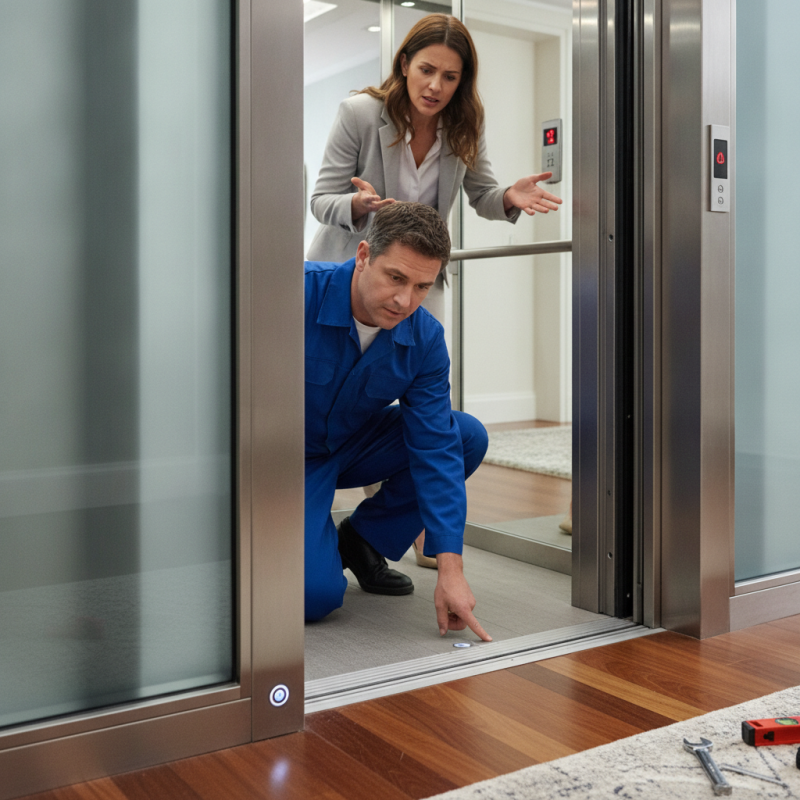
Home lifts can face leveling issues that lead to frustration and concern. One common cause is improper installation. In fact, a study by the National Elevator Industry, Inc. found that nearly 30% of home lift problems stem from installation errors. This often results in the lift not aligning properly with the floor, making it unsafe for users.
Another factor is wear and tear. Like any mechanical system, components can degrade over time. According to the Bureau of Labor Statistics, an estimated 15% of home lift malfunctions are related to aging parts, such as cables or pulleys. Regular maintenance is crucial to identify these wear issues early. For example, if you notice unusual noises, it might be a sign that your lift needs a professional inspection.
Environmental factors can also contribute. Changes in humidity or temperature can affect the lift's mechanics. A report by the Home Builders Association indicates that about 10% of home lift leveling issues can be traced back to environmental shifts. This highlights the need for homeowners to be aware of the surroundings and consider how much impact these factors might have on their lifts. Understanding these causes can help address the underlying issues and ensure a smoother lifting experience.
| Issue | Description | Potential Solution |
|---|---|---|
| Uneven Ground | The surface where the lift is installed may not be level. | Adjust the foundation or add leveling blocks. |
| Mechanical Malfunction | Worn or damaged parts in the lift's mechanism could be causing issues. | Inspect the lift and replace any faulty components. |
| Electrical Issues | Problems with the lift's electrical system may affect its leveling. | Check wiring and connections, and repair as needed. |
| Obstructions | Items blocking the lift's platform can prevent proper leveling. | Ensure the lift area is clear of obstructions. |
| Improper Installation | If the lift wasn't installed correctly, it may not level properly. | Consult a professional for reinstallation or adjustment. |
: Common causes include improper installation, wear and tear, and environmental factors.
About 30% of issues stem from installation errors that affect floor alignment.
Approximately 15% of malfunctions relate to worn-out components like cables and pulleys.
Regular maintenance helps identify minor issues early, preventing more significant problems later.
Inspect tracks and alignment often, and remove any dirt or debris.
Changes in humidity or temperature can impact lift mechanics and contribute to leveling issues.
Unusual noises or vibrations can suggest that a lift requires professional attention.
Yes, uneven weight distribution or flooring may prevent proper leveling even in well-maintained lifts.
Trust your instincts; investigate any unusual sounds or issues promptly.
Regularly lubricate moving parts and monitor for wear and tear to maintain reliability.
If you're wondering "why is my home lift not leveling correctly," several common causes might be at play. Factors such as misalignment, wear and tear on components, or issues with the lift's sensors can lead to improper leveling. Recognizing the signs that your home lift isn't leveling properly, such as uneven stops or unusual noises, is crucial for timely intervention.
To troubleshoot these leveling problems, begin by checking the lift's alignment and ensuring all components are in good condition. Regular preventative maintenance can help avoid future complications. However, if these steps do not resolve the issue, it’s advisable to call a professional to assess and repair your home lift, ensuring it operates safely and efficiently.
