When navigating through buildings, people often encounter lifts and escalators. Understanding what is the difference between a lift and an escalator is crucial for safe and efficient travel. Lifts, or elevators, provide vertical transportation within structures. They move up and down between floors and are typically enclosed. Escalators, however, are moving staircases designed for continuous movement.
Identifying these two can sometimes be confusing. Lifts are used for transporting passengers or cargo vertically. They are essential in high-rise buildings. Escalators are found in malls and transit stations, facilitating easy access between levels without exerting much effort.
People often overlook the significance of choosing the right mode of transport. Misjudgments can lead to delays. It is important to evaluate your surroundings and decide wisely. Knowing what is the difference between a lift and an escalator will enhance your experience in any public space.
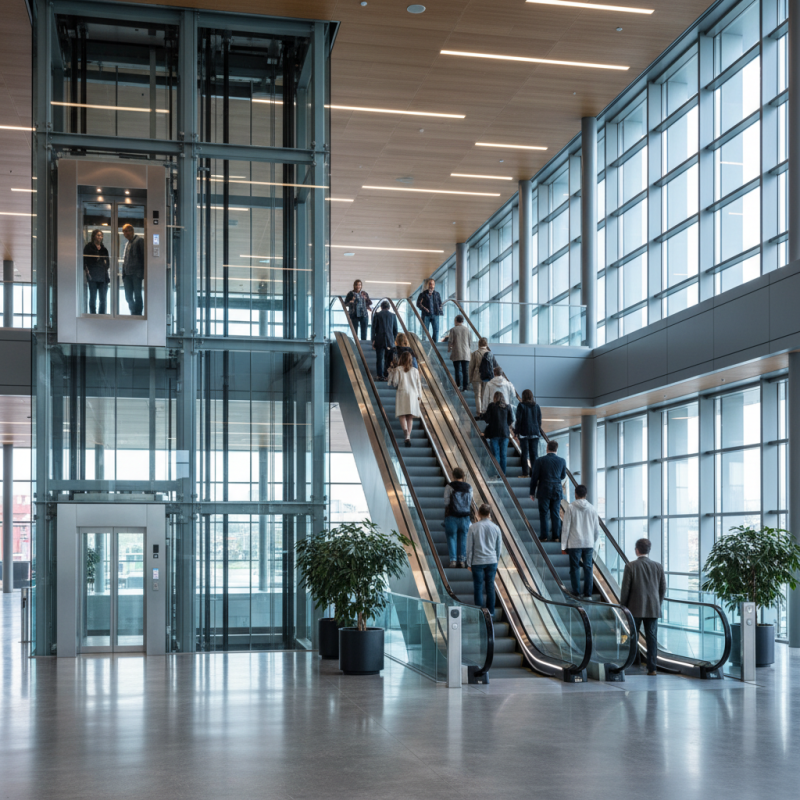
Understanding the Basic Definitions of Lifts and Escalators
Lifts and escalators serve different functions in transport but are often confused. A lift, or elevator, transports people vertically within a building. It moves in a shaft and can hold a variety of passengers, including those with mobility challenges. Escalators, on the other hand, are moving staircases. They help people navigate between different floors, often in shopping malls or train stations.
Understanding these definitions is crucial in navigating public spaces effectively. Lifts usually have doors that open and close, while escalators offer a continuous flow of energy. Recognizing the differences can enhance safety and efficiency in busy environments.
Tips: Always check for the signage indicating lifts or escalators. If you're unsure which to use, observe other people. If someone uses a wheelie bag or a stroller, they likely prefer the lift. Acknowledging these nuances can lead to better choices and experiences. Consider the need for accessibility as well; not all escalators accommodate everyone comfortably.
Key Functional Differences Between Lifts and Escalators
When navigating buildings, distinguishing between lifts and
escalators is essential. Both serve different purposes, impacting our daily experiences.
Lifts, or elevators, transport people vertically within a building.
They are enclosed, providing a private space. Escalators, on the other hand, are
moving staircases that allow continuous movement between floors. They are open, fostering a sense of visibility and interaction.
Functionally, lifts are designed for longer distances and heavier loads.
They can accommodate individuals and groups, especially those with mobility challenges.
Escalators are more suited for shorter vertical travels.
Users can quickly step on and off, often in busy areas like malls or airports.
However, escalators can become crowded. In high traffic times, this may lead to safety concerns and delays.
Understanding these differences can enhance our building experiences. In a tall skyscraper, a
lift is preferred for speed. In contrast, an
escalator is a better choice for shopping centers. This choice can affect
our efficiency and comfort. Reflecting on how we utilize these systems can lead to a more mindful approach
in busy environments.
Common Uses and Applications for Lifts and Escalators
When considering lifts and escalators, it’s important to recognize their distinct applications. Lifts, also known as elevators, are primarily used in multi-story buildings. They transport people and goods between floors. Escalators, on the other hand, are moving staircases designed for continuous movement over short distances. They are commonly found in shopping malls and transportation hubs.
Tips for using lifts and escalators include being aware of your surroundings. Look for emergency buttons in lifts and handrails on escalators. It’s crucial to stand clear while the escalator is in motion. Also, don’t push or crowd on escalators. People often overlook safety in crowded spaces, leading to accidents.
For accessibility, lifts are essential for those with mobility challenges. Escalators, while useful, can pose challenges for users with disabilities. Ensuring you choose the appropriate option makes a significant difference. Users should reflect on their needs when selecting between the two. Good judgment is key in crowded and busy environments.
Usage Comparison Between Lifts and Escalators
Safety Features and Regulations for Lifts and Escalators
When exploring safety features and regulations for lifts and escalators, understanding the differences is crucial. Lifts, also known as elevators, are enclosed and designed to carry passengers vertically. They are equipped with safety mechanisms like emergency brakes, which prevent free fall. Regular inspections are required to ensure compliance with safety standards.
Escalators provide a continuous moving walkway for passengers. They rely on safety features like handrail sensors and emergency stop buttons. These components help prevent accidents. Despite these safeguards, improper use can lead to injuries. Users must pay attention and follow posted guidelines.
Both lifts and escalators are subject to strict regulations. Maintenance checks are mandatory to uphold safety. However, some establishments may overlook these protocols. This negligence can create risks. It’s essential to recognize these shortcomings. Awareness can greatly enhance safety for everyone involved.
Maintenance Considerations for Lifts Compared to Escalators
When it comes to maintenance, lifts and escalators require different approaches. According to a report by the National Elevator Industry, Inc., escalators need more frequent care due to their mechanical complexity. Their moving parts encounter wear and tear from daily use, especially in high-traffic areas. This leads to a greater risk of malfunction. Conversely, lifts generally experience less mechanical stress since they operate within a more controlled environment.
Regular inspections are essential for both systems. The U.S. Department of Labor recommends monthly checks for escalators. Lifts, however, need fewer inspections, often quarterly or biannually, depending on usage. Failures can occur without warning. Safety audits can reveal hidden issues that routine maintenance might miss. Ignoring these requirements can lead to serious safety hazards.
**Tip**: Regularly engage professional maintenance services for both systems to ensure all parts are functioning properly.
As technology advances, maintenance methods are changing. IoT devices help monitor performance in real-time, reducing unplanned outages. However, budget constraints can hinder these upgrades. It's vital for facility managers to prioritize safety without compromising financial viability. Consider developing a long-term maintenance plan that balances regular upkeep and technology investments.
How to Tell the Difference Between a Lift and an Escalator? - Maintenance Considerations for Lifts Compared to Escalators
| Feature |
Lift |
Escalator |
| Functionality |
Vertical transportation |
Inclined movement |
| Capacity |
Up to 20 people |
Typically 20-30 people per minute |
| Installation Space |
Requires a shaft |
Less vertical space needed |
| Maintenance Frequency |
Monthly checks |
Weekly inspections |
| Energy Consumption |
Higher during use |
Steady, lower consumption |
| Safety Features |
Emergency stop, alarms |
Automatic shutdown, handrails |
FAQS
: Lifts transport people and goods in multi-story buildings. Escalators move continuously over short distances in places like malls.
Always be aware of your surroundings. Look for emergency buttons and follow posted safety guidelines.
Stand clear while the escalator is moving. Avoid pushing or crowding, as this can lead to accidents.
Yes, lifts are essential for those with mobility issues. However, escalators may not be as accessible.
Lifts have emergency brakes and require regular safety inspections to function properly.
Escalators have handrail sensors and emergency stop buttons, but users must still use them properly.
Reflect on your needs. Lifts are better for those needing assistance. Escalators suit those who can manage stairs.
Both are subject to strict maintenance checks and safety regulations, but those standards can sometimes be overlooked.
Ignoring safety protocols increases risks and can lead to accidents. Awareness and adherence are crucial for safety.
Yes, improper use can cause injuries, especially in crowded environments. Always follow guidelines to minimize risks.
Conclusion
The article titled "How to Tell the Difference Between a Lift and an Escalator?" provides a comprehensive look at the distinctions between these two vertical transport systems. It begins by defining lifts and escalators, highlighting their fundamental differences. While lifts are enclosed systems that transport people or goods between floors, escalators are moving staircases designed for individuals to walk up or down.
Key functional differences are examined, including their uses in various settings, such as commercial buildings and public transport facilities. The article also addresses safety features and relevant regulations that ensure user safety for both lifts and escalators. Additionally, maintenance considerations are explored, emphasizing the different requirements for upkeep. Overall, understanding what is the difference between a lift and an escalator aids in choosing the appropriate system for specific needs.
 Vanguard Lift
